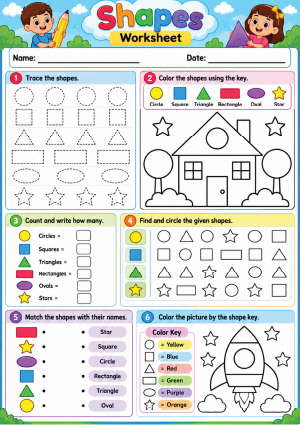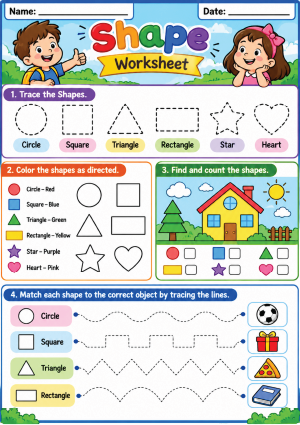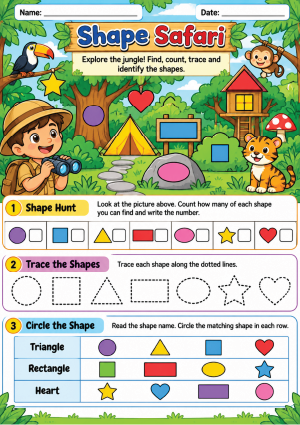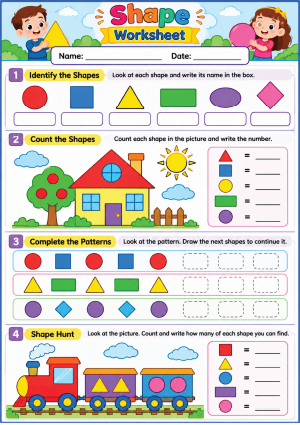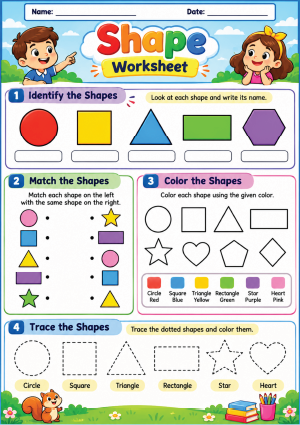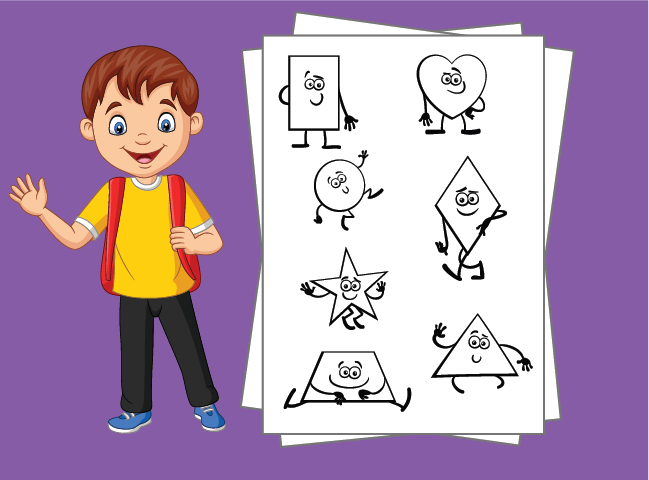
Recognizing shapes is an important early mathematics skill. A thoughtfully designed shapes worksheet for preschool can help children notice circles, squares, triangles, rectangles, and other familiar forms in a clear, engaging way. At this age, learning is most effective when children can connect pictures on a page with objects they encounter every day.
Begin with a small selection of basic shapes. Invite children to name each one, trace its outline, and point to examples in the classroom or at home. A circle might resemble a plate, while a rectangle could look like a book. These simple comparisons make new vocabulary meaningful and encourage careful observation.
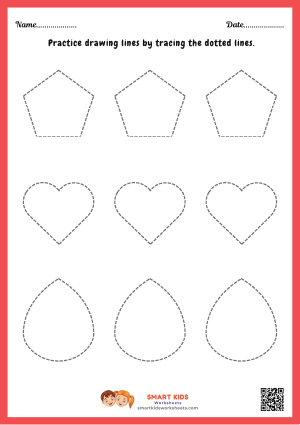
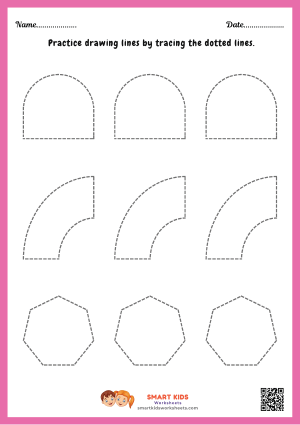
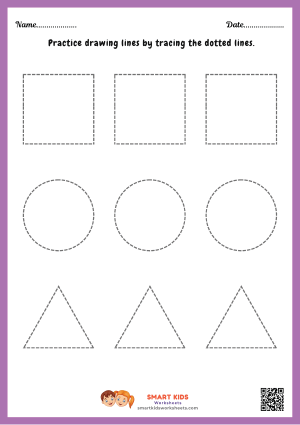
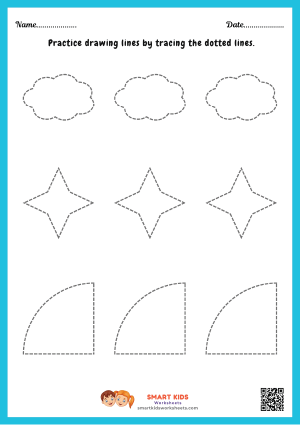
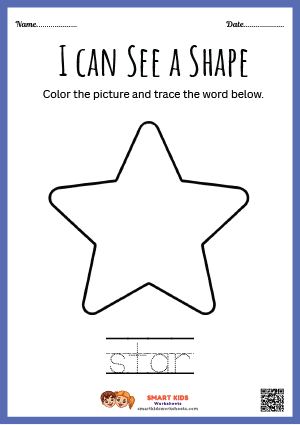
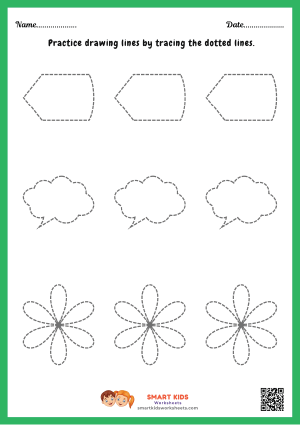
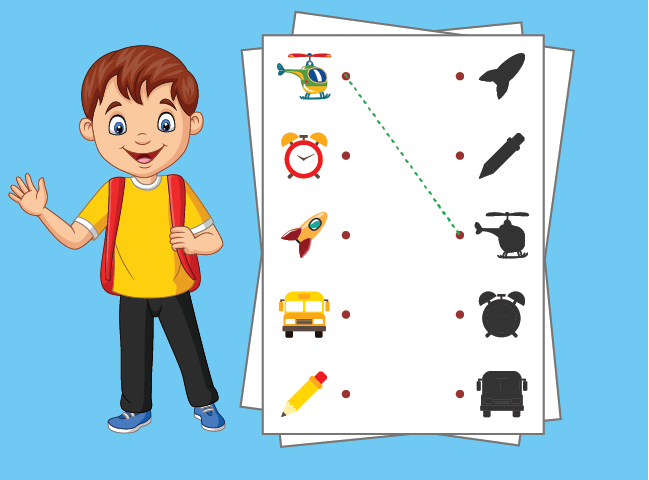
Worksheets can offer more than a naming exercise. Children may match identical shapes, sort pictures by form, color selected figures, or draw a line from an object to its matching outline. Tracing activities also support pencil control and hand coordination. For variety, ask learners to count the sides or corners of a shape, using age-appropriate language and gentle guidance.
Keep each task brief and visually uncluttered. Large images, clear instructions, and plenty of space to draw help preschoolers focus without feeling overwhelmed. Offer support when needed, but allow children time to make choices and explain what they notice. The goal is exploration and understanding, not perfect performance.
Learning continues beyond the worksheet. After completing an activity, encourage children to search for shapes around them: a window may be a rectangle, a clock face may be a circle, and a floor tile may be a square. This connection reinforces recognition and shows that geometry is part of ordinary surroundings.
Choose activities that suit each child’s current abilities. Some children may be ready to compare shapes, while others benefit from naming and matching just a few. With repetition, conversation, and playful practice, preschoolers can build confidence, strengthen early math skills, and develop a lasting curiosity about the forms they see around them.
Share this worksheet
Tags: