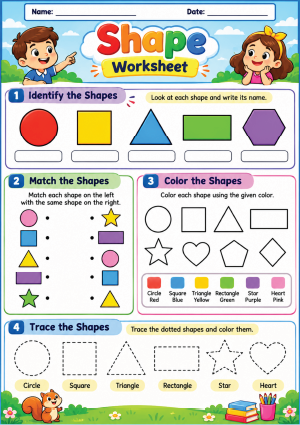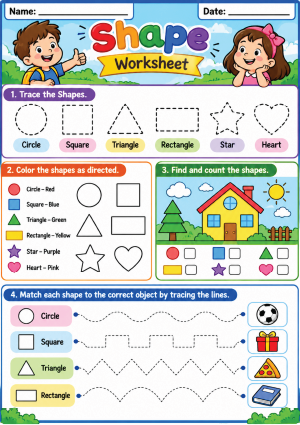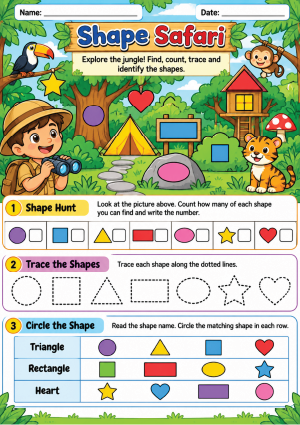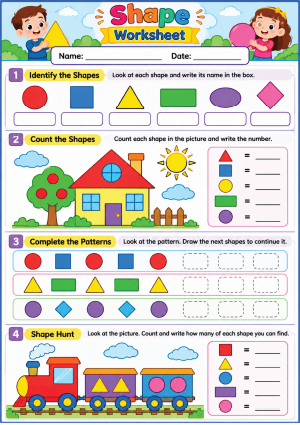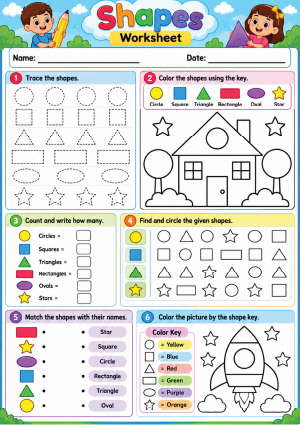
Learning to recognize shapes is an important part of early childhood education. As children notice circles, squares, triangles, and other forms, they begin to describe what they see and understand how objects relate to one another. These early geometry skills also support observation, vocabulary, sorting, and problem-solving. A thoughtfully designed shapes worksheet for preschool can introduce these concepts in a clear, approachable way.
Worksheets are most effective when they complement hands-on learning rather than replace it. Children can first explore familiar objects, such as plates, books, and building blocks, then look for matching shapes on the page. Connecting pictures to real items helps make abstract ideas easier to understand.
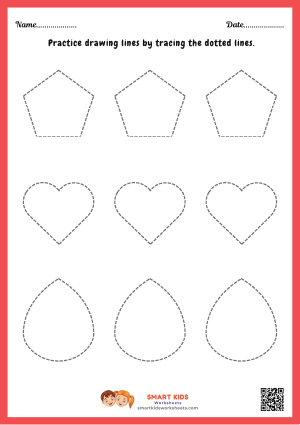
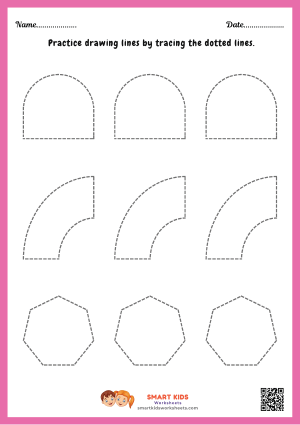
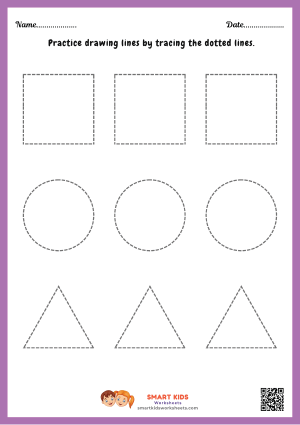
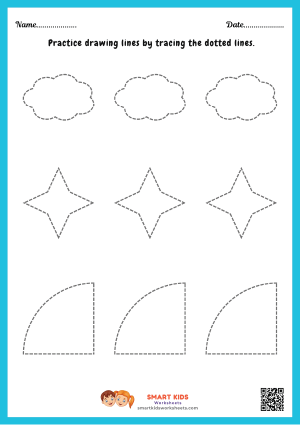
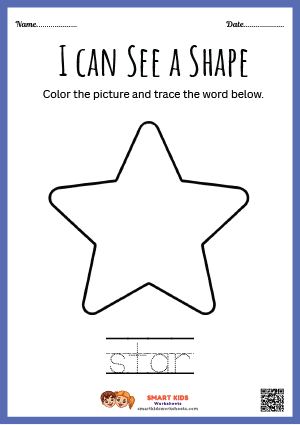
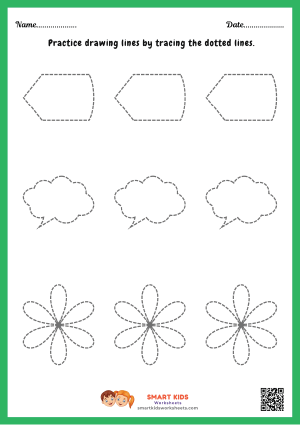
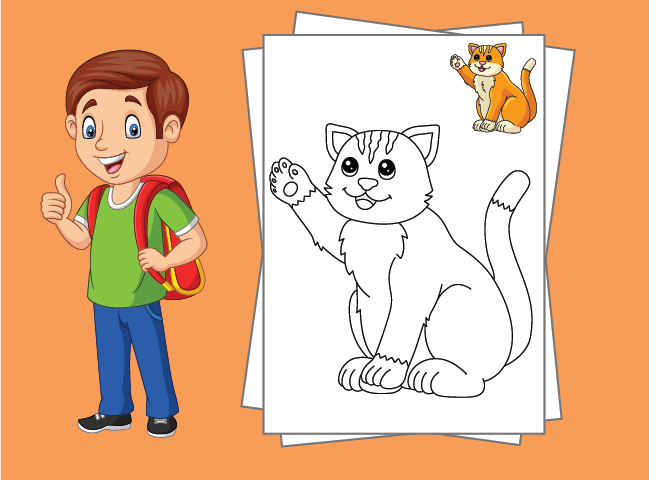
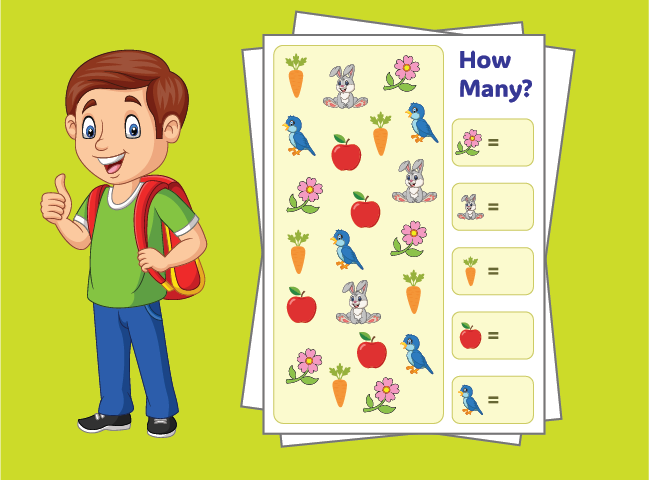
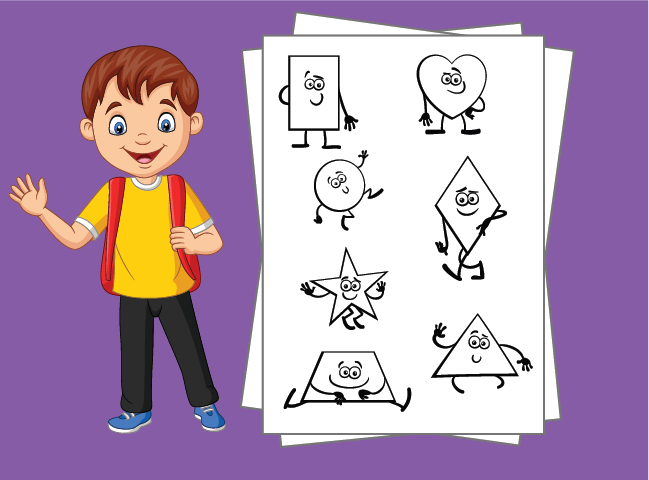
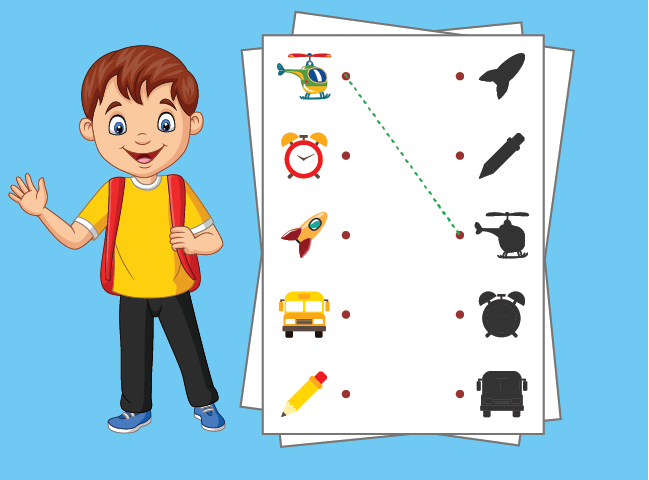
For young learners, begin with a small selection of basic shapes and uncluttered pages. Large outlines, clear illustrations, and simple directions make activities easier to follow. Matching, tracing, coloring, and shape-identification exercises can each reinforce recognition in a different way.
As children gain confidence, introduce variations in size, color, and orientation. A triangle may point in different directions, for example, while still remaining a triangle. This encourages children to focus on defining features instead of relying on one familiar picture. Activities that ask children to sort shapes or identify them in a scene can also extend learning without making the task feel overly difficult.
Keep sessions brief and provide encouragement throughout. Invite children to name each shape aloud, describe its features, or explain how they made a choice. There is no need to rush through every page; repetition can help build confidence and strengthen recall.
Families and educators can add movement by asking children to find shapes in the room, make outlines with craft materials, or create pictures from cutout forms. These simple extensions turn practice into an active experience and give children more opportunities to use new vocabulary.
Observe how each child responds and adjust the challenge as needed. Some may benefit from repeated matching practice, while others are ready to compare shapes or combine them into patterns. With patient guidance and varied activities, preschoolers can develop foundational geometry skills while enjoying the process of discovery.
Share this worksheet
Tags: